
Preview
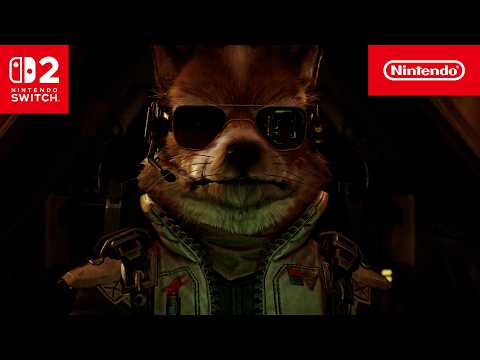
Download opens the original community-hosted file. Only use packs you have the right to access and share. DMCA · Report this pack
Description
Suggested tags
Use up to 12 tags when uploading your own pack to Voxalike.
Source notes
Source context and why this moment travels
Star Fox (2026) Prologue did not become attractive material merely because a recognizable title appears in the thumbnail. Its usable core is the shift from world-setting narration into active mission readiness, where the cast stops explaining and starts sounding prepared: a moment compact enough to quote, but structured enough to support different performances.
The pack centers on a Star Fox prologue sequence that introduces a space mission through cinematic narration, team energy and cockpit-ready reactions. That premise should guide decisions about tempo and scale. Music-driven material needs continuity across clip boundaries; a television sketch depends on listening and escalation; a meme often survives through compression; a game cutscene carries status through camera position and silence. Treating every source as generic dialogue erases the property that made somebody want to dub it in the first place.
Use the embedded video as a reference copy, not as an unquestionable acting prescription. First watch for entrances, visible breaths, mouth closures, cuts and reaction shots. Then listen for the emotional action under the words. Finally, perform one pass without the source audio. This sequence separates synchronization evidence from an actor's particular choices and gives your group room to create a version that is still compatible with the edit.
The uploader metadata identifies the community submission and the downloadable archive, while this guide supplies editorial interpretation for Voxalike players. Statistics shown on the page are a dated snapshot, not a quality score. A smaller pack may be more useful for a warmup; a larger archive may justify a planned group session. File size, role count, sensitivity notice and performance demands should influence the choice more than popularity alone.
When discussing provenance, be precise about what is known. The preview establishes the visible material; the uploader's title and notes establish how the submission was labeled; neither automatically proves ownership of every underlying asset. Do not claim an episode, edit history or original creator unless the source supports it. For Star Fox (2026) Prologue, the defensible description is the uploader's linked Star Fox prologue video adapted as a large introductory dub pack for The Choicer Voicer. That wording gives players orientation without turning an inference into a fact.
Source literacy also improves performance. If a group understands why the shift from world-setting narration into active mission readiness, where the cast stops explaining and starts sounding prepared is memorable, it can choose which element to preserve. One session may closely match pace while changing character voices. Another may keep the emotional relationship but translate the style into deadpan. Both choices can work when they are deliberate. Random replacement, by contrast, usually produces noise because every player changes a different variable at once.
Keep a short source note with the exported session: title, preview URL, the date accessed and one sentence about the interpretation used. That record helps collaborators understand later edits and gives you a clean path to review or remove material if a rights holder raises a concern. Voxalike Games maintains a DMCA process, and source-aware notes make responsible follow-up much faster.
Setup workflow
Import and verify the pack in Voxalike
The archive for Star Fox (2026) Prologue is star-fox-prologue-nintendo-switch-2_57469.zip (287 MB). Download it only when you are ready to inspect and use it; the button opens the current community-hosted file and carries a nofollow signal. Keep the ZIP intact until Voxalike has recognized the pack, because manually rearranging files before the first import makes missing media harder to diagnose.
- Download and identify the file. Confirm that the browser saved the expected archive name and that the transfer completed. Do not substitute a similarly named ZIP from a search result. If your browser renamed a duplicate with a number, note that before troubleshooting so every player is discussing the same local file.
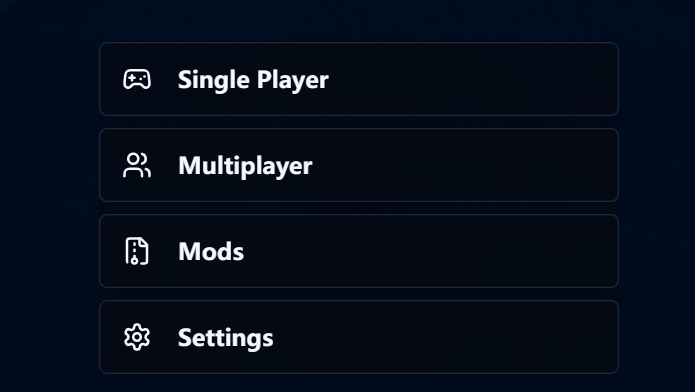
- Open Manage Dub Packs. Start Voxalike, enter the pack-management area and use the game's import or local-pack control. The screen may vary by release, so follow the action label rather than relying on a pixel-perfect position. Keep this guide open in another tab for the description, suggested tags and performance notes.
- Select the untouched ZIP. Choose the downloaded archive. Wait for extraction or indexing to finish before clicking again. Large packs such as this one can appear inactive while media is being read. Repeated clicks may start duplicate work and make the result harder to interpret.
- Verify title, preview and roles. Open the imported entry and compare its title with Star Fox (2026) Prologue. Check that the expected roles appear and that the preview loads. For this scene, the role plan should support a Star Fox prologue sequence that introduces a space mission through cinematic narration, team energy and cockpit-ready reactions. If the list is empty, refresh packs once before redownloading.
- Run a short media test. Play the beginning, middle and ending rather than watching only the thumbnail. Confirm video, guide timing and source audio behavior. Record one throwaway line, play it back and check microphone selection. This catches browser permission or device issues before the group invests in a full performance.
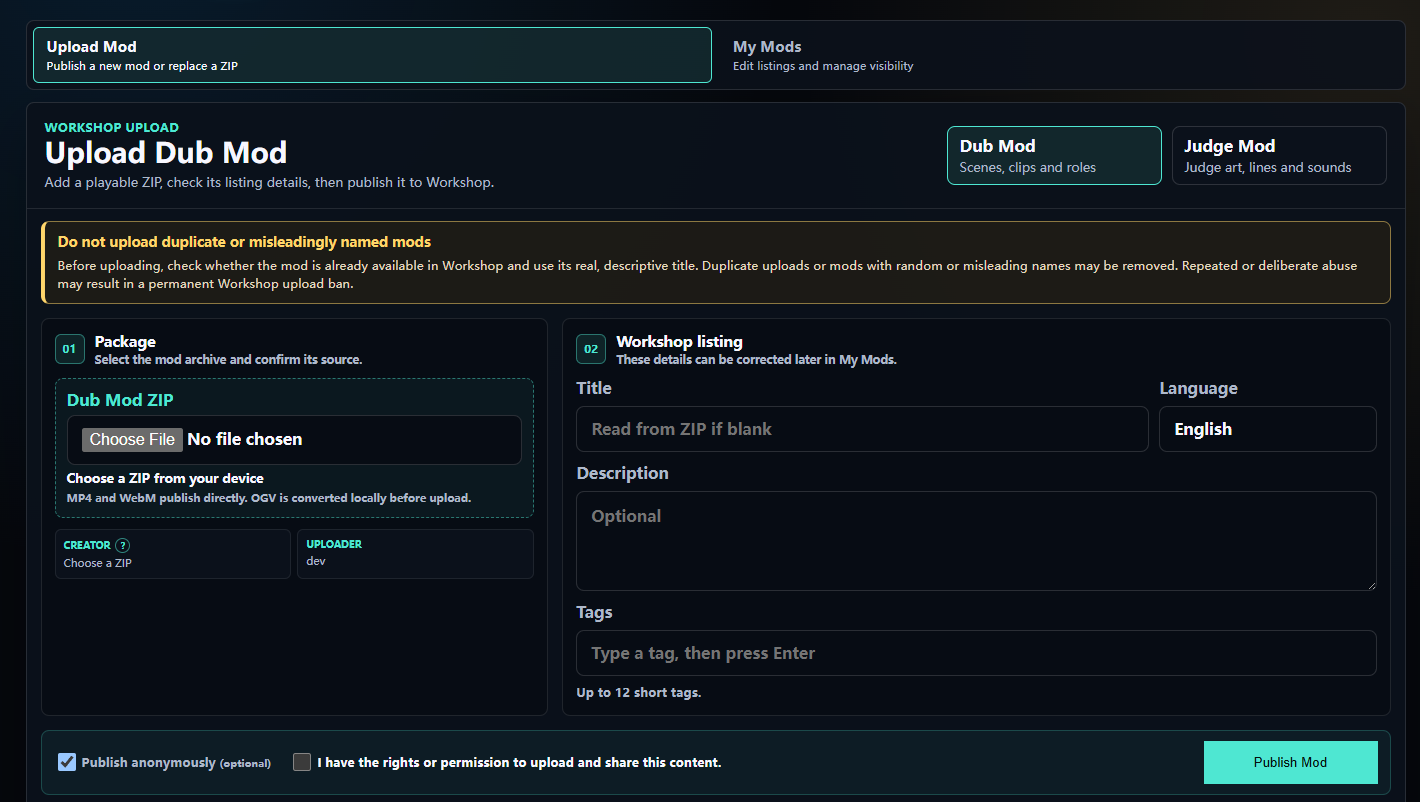
- Prepare upload metadata separately. The Description and Suggested tags panels above are copy-ready aids for a Voxalike submission. Review them and adapt details to your version instead of presenting another uploader's work as your own. Keep the scene description factual, choose tags that describe content and performance, and credit source material where the upload form allows.
If import fails, separate download problems from game problems. A zero-byte or partial archive needs a fresh transfer. A complete ZIP that cannot be indexed may require a Voxalike refresh or a check against the version named elsewhere on this site. A pack that imports but shows missing media needs closer inspection of the archive itself. Change one condition at a time and keep the original ZIP available for comparison.
Once the test passes, assign roles and agree on the performance target: wide-screen adventure tone, clear ensemble spacing, controlled heroic emphasis and sci-fi urgency that remains easy to follow. That final check links technical setup to the scene you actually intend to create. A working archive is only the beginning; a prepared session is what keeps players from leaving the page to search for basic context.
Role assignment
Cast the scene before you record
Casting this pack by vocal resemblance alone misses the useful part of the exercise. Match players to listening behavior: give the role that drives the shift from world-setting narration into active mission readiness, where the cast stops explaining and starts sounding prepared to someone who can change intention quickly, and give the stabilizing role to a player who can stay present without competing for attention.
The central performance target is wide-screen adventure tone, clear ensemble spacing, controlled heroic emphasis and sci-fi urgency that remains easy to follow. Use that target as the casting test. Every player should try one representative line at conversational volume, then repeat it while watching the preview rather than the script. The better fit is the person whose timing responds to the image, not necessarily the person who produces the closest impersonation. A dub becomes convincing when intention, breath and cut all agree.
| Role | Difficulty | Direction |
|---|---|---|
| Mission narrator | Intermediate | Give the opening shape and scale without turning every sentence into a climax. |
| Lead pilot | Advanced | Sound ready for action while still listening to the briefing and other crew cues. |
| Wing support | Intermediate | Separate short reactions through intention, not random accents. |
| Continuity controller | Beginner | Track whether the prologue builds toward action instead of becoming disconnected trailer lines. |
After casting, establish a cue system. The director says the clip number, names the emotional action in one verb and gives a silent count-in. Useful verbs include challenge, reassure, conceal, provoke, recover and invite. Avoid notes such as "make it funnier" or "sound more like the original" because they describe a result without giving the player an action. One playable verb is easier to repeat across several takes and easier to compare during playback.
Record a neutral pass first. That pass reveals timing, pronunciation and microphone problems without hiding them beneath performance choices. On the second pass, exaggerate the role's objective; on the third, reduce the exaggeration by half while keeping the clearer intention. This three-pass method is especially effective for a Star Fox prologue sequence that introduces a space mission through cinematic narration, team energy and cockpit-ready reactions because it creates options without asking the group to invent a completely new interpretation each time.
Finally, listen to the handoffs rather than isolated voices. A strong first line can still damage the scene if it leaves no room for the response. Check whether breaths overlap important words, whether one player changes volume simply because another player did, and whether the shift from world-setting narration into active mission readiness, where the cast stops explaining and starts sounding prepared remains easy to perceive with the screen turned away. If the beat works as audio alone and becomes richer with the image, the cast has built a dependable version.
Beat breakdown
Read the beats, not just the lines
Watch the preview once with the sound low. The edit still tells you where attention shifts, which is a good defense against copying only the source delivery. For this pack, the visual path supports a Star Fox prologue sequence that introduces a space mission through cinematic narration, team energy and cockpit-ready reactions and gives four practical recording beats.
- Establish the ordinary. Let the opening define the world before the memorable behavior arrives. Match the source pace closely enough that viewers understand who is speaking and what is expected. Do not spend the largest voice or fastest rhythm here. A restrained beginning creates somewhere for the performance to go and makes later contrast legible.
- Apply pressure. Listen for the first image, phrase or reaction that complicates the setup. In this pack, that pressure grows from a Star Fox prologue sequence that introduces a space mission through cinematic narration, team energy and cockpit-ready reactions. The responding player should change thought before changing volume. A tiny breath, delayed pickup or newly precise consonant often communicates the turn better than a sudden shout.
- Protect the pivot. The decisive event is the shift from world-setting narration into active mission readiness, where the cast stops explaining and starts sounding prepared. Give it clean space on both sides. If the line begins too early, the viewer misses the setup; if the reaction continues too long, it explains the joke or emotion after the image has already done the work. Record one take with the source timing, one slightly earlier and one slightly later, then compare in context.
- Land and recover. A payoff is not finished when the key line ends. The next breath, look or short response tells the audience how to receive it. Keep the character's objective alive through the tail of the clip and resist inserting commentary. The best ending feels inevitable in retrospect while still preserving a little surprise.
Use waveform shape as a diagnostic, not as a performance goal. If every line has the same density, the scene probably lacks hierarchy. The setup should look and feel different from the pressure beat; the pivot should have either more energy or more space; the aftermath should release or redirect attention. Those contrasts matter more than making every clip equally loud. Normalize only after the dramatic relationships are working.
A practical review method is to play three versions back to back without revealing which take is which. Ask each listener to name the moment the scene changes and the character they watched during that moment. Agreement means the structure is readable. If listeners name different pivots, revisit the pickup before the shift from world-setting narration into active mission readiness, where the cast stops explaining and starts sounding prepared rather than automatically rerecording the loudest line. Structure usually fails one beat before the place where the problem becomes obvious.
This analysis gives the page value beyond a download button: it tells a group what to listen for, where to spend rehearsal time and which choices can safely vary. You do not need to reproduce the source actor's exact sound. You do need to preserve the relationship between setup, pressure, pivot and recovery so the scene remains intelligible to someone seeing your version for the first time.